Ben’s Kettlebell Training Problem (and how we solved it)

The other day, one of my private training clients, let’s call him “Ben”, came to me with a gripe.

He LOVED the results he has been getting from our kettlebell workouts. But his complaint was that we were doing too much of the same thing. We have been working on the same routine for about three weeks, and he was getting a little bored.

Now, as a fitness professional, I know what is best for Ben and his goals – and that is to stick with the same program framework for at least a couple more weeks. He has been making progress, and has not hit a plateau, so there is no reason to switch things up. He just needs to get tough 🙂

BUT – I also am very careful to listen to my clients, and I want to do my best to keep them happy, having fun, etc. So we decided to introduce some of what Pavel calls “same-but-different” programming into the mix. We stuck with the same basic workout framework, but did variations of some of our exercises to change things up and keep them interesting. This was a great solution for Ben. He started enjoying his workouts again, and in fact started making even FASTER progress because of it!!


If you can dig this idea, you’ll LOVE this:

=> Get three new “same-but-different” workouts every week (deal expires)


For this approach to work though, you have to do it in a very specific way. You can’t just go substituting exercises willy-nilly. You have do switch out and progress to moves that are “same-but-different”.

Let me give you an example. Let’s say that your workout calls for a kettlebell press. What you can do is different versions of this press.

So let’s say that the first day of your routine calls for a double kettlebell press.  You’re doing your double press as part of a superset or by itself or whatever. There are all kinds of variations you can do of those presses.

One variation is an alternating press.

You can do alternating double kettlebell presses.  

You can also do, for example, a see-saw press. That’s where you take both of your ‘bells and one is coming down and the other one is getting pressed up. That’s one of my favorite press variations right there.  That’s a tough one.

Another option is a walking see-saw press. So you do that see-saw press but you take a small step forward, press on the right, take a small step forward and press on the left. Repeat that for reps.

You can use this concept with MANY exercises.

Another good example is with kettlebell swings. You could be doing two handed swings, one hand swings and hand-to-hand swings.

You can do it with body weight exercises. For example you can do squat thrusts which is like a burpee without a push up or a jump. You could do a burpee without the push up. You can do a burpee with a push up.

This simple concept can make a HUGE difference in your training.  I use it in my personal workout planning as well as with my training clients on a daily basis, and it works great.  I hope you can dig it and work it in to your programming to see some increased results!

Train hard, and talk soon –

Forest


PS – If you liked this article, you’ll LOVE this:

=> Get three new “same-but-different” workouts every week (deal expires)

How to Keep Your Body Weight and Kettlebell Workouts Interesting

So I am always preaching about the benefits of sticking with the same workout plan for a period of time, and not changing things up too often.  However, I also am fully aware of the potential resistance to this concept.  That you probably want to change your workouts up frequently and keep them interesting, for the sake of fun and variety if nothing else.

In the video below, I cover the best solution to this problem.  This is the approach we take in my Sacramento, CA boot camp classes, and it works great.  Check it out:

Video Recap

Today I want to talk to you about how to keep your body weight and kettlebell workouts interesting, and also continue making progress.

So with this question, a lot of trainers will tell you that you don’t want to do the same thing over and over because your body will adapt and then you’ll stop making progress. This is true … but on the other hand, you can also go overboard with this. If you change your workout every day, every single time and do something completely different with no rhyme or reason…that’s actually bad. That gives you no chance to, for example, progress on a certain exercise. You can’t see if your kettlebell swings are getting better, or if your technique is improving. You can’t see if you can do more pull ups.  You can’t see if your squat poundage is improving, or whatever you are working on.

So what we actually do in the boot camps at my training studio in Sacramento, to keep our body weight and kettlebell workouts interesting, is we will change the workouts up frequently, but we also have a theme that we work with each day.  For example.  In any given week, we’ll alternate between a strength based day where we do heavier lifting (although we usually still have some sort of cardio element). We’re lifting heavier weights to focus on building strength those days. We’ll alternate that with a conditioning day where we are doing more body weight based movements, we’re keeping the heart rate up the entire time, we’re incorporating running, stuff like that. We’ll alternate back and forth so that, number one, people can train every day. Number two, we have sort of a general theme we’re working with but it still allows you to keep making progress over time, getting better at certain exercises and working towards a specific goal.

I hope that helps you with keeping your body weight and kettlebell workouts interesting, and also continuing to make progress over time!

PS – If you liked this video and article, stay tuned for some exciting stuff.  I’ve come up with a way to give you several brand new high-intensity, 30-minutes-or-less, do-anywhere FVT workouts that you can use yourself, with your training clients, boot campers, etc. – every single WEEK – at a super low cost.  I’m pumped about it 😉  Talk soon!

#1 Cause of Kettlebell Training Injury?

I am SO sick of people making this training mistake.  It could very well be the #1 cause of kettlebell training injury.

If anyone made this crucial error at the RKC – which, unfortunately, they did 😉 – our chief instructor made us ALL do 50 penalty burpees.

Although the burpees sucked, I think it was a good idea.  Because you can really injure yourself doing this.  And it’s so easily avoided.  Watch the video below to see what it is:

Video Recap

Today I’m going to cover something pretty basic but very important and that is how to pick up a kettlebell, or any kind of weight for that matter, up off the ground. Now this is like if you are shifting the ‘bell off the ground, or if you are moving it around to get ready for your set.

What happens all the time with new people in our boot camps is they go to pick up the ‘bell and while they are focused on using good form during the set, they are moving the kettlebell around and getting all sloppy and being totally careless moving the weight around between sets.

So anytime you pick up the KB, make sure that you have a nice flat back, use good form like you are doing a deadlift.  It might seem like a small thing, but I can tell you from personal experience that the only time I’ve actually tweaked my back with kettlebells was between sets and moving a heavy ‘bell while being careless.

So that’s a basic tip for you, but is really important for long term safety when doing kettlebell training.   


Okay.  Quick, simple, but CRITICAL tip to keep your KB training safe for the long haul.  Train hard, and talk soon –

Forest

PS – If you liked this video, please share it with your family and friends! And – if you haven’t grabbed your free copy of my Beginner’s Guide to KB Training – make sure to do it now by dropping your best email address into the box at the upper right of the page.

Kettlebell Strength Q&A

Hope you are having a FANTASTIC weekend. The weather is great here in Northern California, perfect for an outdoor workout.

I am about to head out for a quick KB session and bike ride, but before I do –

I have been getting a lot of questions about my new Hybrid Kettlebell Strength program. So, I thought I would go throug,h and answer some of the ones we are getting over and over. I think these will help you out, whether you are doing Hybrid KB Strengh, or any other strength-based program.

Let’s go –


Q: How do I bump up the weight(s) I am using in my workouts?

A: Incorporate strength work into your overall routine, and use the principle of progressive overload.

Simply put, you need to strive to use more weight in your workouts over time. If you are pressing a 12k today for three sets of eight reps today, try to get nine, eight, eight with it next time. Then nine, nine, eight. Then nine, nine, nine. Then maybe ten. Then maybe bump up the weight. Etc.

THIS is why we want to stick with the same workout and exercises for at least four to six weeks, BTW. PARTICULARLY if gaining strength is our goal. If we change things up more frequently than that, there is no way to measure progress and see if we are getting better at specific exercises.

Q: How often should I change up my workouts?

A: Every four to six weeks.

If you are not the type that gets easily bored with your workouts, you could actually probably do the same workout even eight, ten weeks, or more. As long as you are making progress on the routine you are doing, you can (and should) keep doing it.


Q: How to I scale up or down, and adapt things for a more basic – or more advanced – fitness level?

A: Here are some progressions for some basic exercises included in the Hybrid Kettlebell Strength and Conditioning program. I have listed them in order from easiest/most basic variation, to hardest/most difficult variation:

  • split squat-bulgarian split squat-bulgarian split squat with weight
  • inverted row-band assisted pull up-standard pull up-pull up with kb on foot
  • burpee with hands elevated, no jump at top – burpee with no jump at top – burpee with jump at top – burpee with jump at top, push up on the floor
  • hands elevated push ups-knee push up-standard push up -feet elevated push up


Q: What if I travel often, and don’t have access to any equipment?

A: Plan ahead, and work around it.

For your real strength days, it is best to have access to your KB’s. So plan those one to two days per week for when you are home, or will have access to kettlebells.

Then, you can do body weight – based workouts for your metabolic conditioning days when you are on the road.

You can also do interval cardio when you are on the road – running is the simplest way, or just using simple body weight – based movements (jumping jacks, burpees, mountain climbers, etc.)

I travel about once a month or so – in anywhere from three to seven day stretches – and this system works great for me. I am able to stay on track with my workouts and even make progress while I am away.


Q: What if I only have three days per week to train? Can I still make progress?

A: Follow this template:

Day 1 – Metabolic conditioning + interval cardio
Day 2 – Off
Day 3 – Heavy strength + Recovery/LSD cardio
Day 4 – Off
Day 5 – Metabolic conditioning + interval cardio
Day 6 – Off
Day 7 – Off

This will allow you to get all the work you need in three 45 -60 minute sessions.
Alright! Hope this Q&A has helped you out. If you have any other questions, I am here to help – feel free to ask them. Now I’m off to hit my kettlebell workout for the day!

Train hard, and take care –

Forest


PS – Hybrid Kettlebell Strength and Conditioning is on sale for just one more day. Check it out and grab your copy at a great discount here:

=> Hybrid KB Strength and Conditioning

53 Kettlebell Boot Camp Workouts

I have a “little black book” of my favorite kettlebell boot camp workouts – which I’m always adding to, tweaking, etc. – and 90% of the time, that’s where I pull my daily boot camp workouts from.  This way, I don’t have to spend hours a day racking my brain for fresh  and fun training ideas.

Of course, I have a plan and progression for my programming over time – but this method makes my life SO much easier.

Now, if you are a boot camp instructor – or, if you are just a boot camp workout enthusiast – you should be doing the same.  It’s the only way to go!

Interestingly though, based on talks with dozens of friends and associates in the business – most people KNOW they should be keeping their own version of a “little black book” – but for whatever reason, DON’T.

So I’ve come up with a solution to this problem.  I’ve put together dozens of my favorite kettlebell boot camp resources, for you to “steal” and use with your campers (and yourself!)

Click here to check it out now:

=> Over 53 Kettlebell Boot Camp Workouts

Thanks, and talk soon –

Forest Vance, MS, RKC II

Safe and Effective Kettlebell Training (#1 secret)

I returned home late on Sunday night from my weekend San Jose RKC assistant duties, and I was right back at it Monday morning, teaching a kettlebell boot camp at my Sacramento, CA training studio.

After about 30 hours of learning and teaching kettlebells over the weekend – with some incredibly great and smart folks – I noticed that my boot campers were actually pretty darn dailed in with their swing form. Nice! Good job Forest! 🙂

So, on my drive home from work last night, I started thinking a bit about WHY this is so.  I mean, go into some workout rooms full of people swinging kettlebells, and instead of impressive, things look ugly.  Real ugly.

One reason that our campers look good in the kettlebell form department is simple – we care. We want people to do things RIGHT, and we coach them up until they get it. We don’t tollerate sloppy form.

However, I believe the single most important factor contributing to good kettlebell training form is effective cuing.

This is actually a somewhat complex topic, and can be broken down into all different specific components (visual, auditory, kinesthetic, etc.) … but at its core, is all about matching your teaching style to a student’s learning style.  It is part science and part art.

What I wanted to do in today’s post was simply break down a few of my favorite cues I have learned over the years. These will help you immensely if 1) you are a trainer yourself, or 2) you are training on your own and are having a hard time mastering the technique of a specific KB exercise.

I have also tried to include WHERE I got these cues … because I want to give credit where it is due!


5 Cues for Safe and Effective Kettlebell Training


1 – Punch your butt through a piece of glass behind you

This one comes from the book Kettlebells for Dummies by Sarah Lurie.

It’s a great one if you are having a hard time getting down the hip hinging movement that is the foundation of the kettlebell swing.

As you decend into the deadlift, punch your hips back like you are pushing them through a piece of glass behind you.

I go through a little breakdown of this in a recent video – check it out here:

=> HardStyle Kettlebell Swing Progression (part 1)


2 – Don’t be the guy at the beach

Got this one from David Whitley (the Iron Tamer).

This applies when you are doing a Turkish Get Up – to your bottom shoulder.

A lot of folks make the mistake of letting themselves slouch to the ground with their bottom (closest to the ground) shoulder during the movement.  Hence, you look like the “guy at the beach”.  Do NOT do this.

Instead, push yourself away from your shoulder, and create as much space from your shoulder to your ear as you can. This is a good cue to get you to do that.


3 – Just the right amount of power on the clean

This one comes from the Dragon Door forum, I think … honestly can’t remember.  Sorry to whoever I learned it from 🙂

If you are doing a KB clean, and you give it too much hip snap, the kettlebell will fly up and whack you in the wrist.

If you don’t give it enough power, the move essentially turns into a cheat curl.  Not what we are going for either.

Get it just right, and the movement is a thing of beauty.

Check out this video for a more detailed explanation:

=> How to Fix Your Kettlebell Clean


4 – Throw the kettlebell through your stomach

I am not sure where I got this one to be honest … it was from an RKC though, and maybe on a YouTube video somewhere … thanks again 😉 …

Anyway, it is great to get the proper path of the kettlebell going from the top of the snatch, down to the finish.  Just imagine your are throwing the ‘bell back through your stomach, as it comes out of the top locked out position.


5 – Rip the handles of the kettlebell apart – while keeping your arms straight

This is a great one to help you get your shoulders back in the two handed deadlift and swing movement.  Got this one from Pavel at my first RKC.

When you are at the top of a deadlift position, keep your arms straight, and imagine like you are ripping the handles of the kettlebell apart.  This will fire your lats and force your shoulders down.


Okay! There are five of my favorite coaching cues for you. Use these cues to improve your own form and that of those that you coach.  And watch your progress go through the roof!

Thanks for reading, and talk soon –

Forest Vance, MS, RKC II


PS – I got a killer new package of kettlebell boot camp workouts I’m putting together for you, and it’ll be available this weekend at a great discount.  Keep an eye on your email inbox for details …

PPS – If you want to learn more coaching cues like these, I recommend you attend an RKC event yourself. There is nothing like it. Click here for a list of all upcoming Dragon Door workshops:

=> Upcoming RKC Events

3 Tips for Better Kettlebell Boot Camp Workouts

I love leading fitness boot camps at my Sacramento, CA kettlebell gym.  I am coming up on ten years of personal training experience, and I truly feel like  I have found my life’s purpose.  Rarely is there a day where I actually feel like I am “going to work”.

I am also dedicated to being a life-long student of my craft – and continue to learn and improve how I do things each and every day.  So, whether you are just getting into training with kettlebells, or you are a fitness boot camp instructor yourself, I thought some of the lessons I have learned along the way in the area of better kettlebell boot camp workouts might be of use to you.

Watch the video first, then read the recap below it:

Video Recap – 3 Tips for Better Kettlebell Boot Camp Workouts


1 – Make sure you select your kettlebell exercises wisely

When I first started teaching kettlebell boot camps about five years ago, I didn’t give a lot of thought to matching exercise selection to group ability level.  This was a big mistake.  Some folks would leave feeling like the workout was too easy, and some ended up in way over their heads.

Sometimes, keeping it simple is the best way to go in a fitness boot camp setting. For most, exercises like kettlebell swings, goblet squats, and rows are effective and easy to teach. With more advanced students, exercises like windmills and push presses can work well. The important thing is to be attentive to what your class is ready for.

2 – Set a new personal record for each session

Trying to do just a little better each day is an AWESOME way to keep yourself motivated, and continually progressing towards your fitness goals.  It’s also a great way to stick to your workouts for the long term – and to get your campers to stick around for a long while, too.

Pushing yourself and your students harder leads to more efficient and intense workouts. That could be using a heavier kettlebell or adding more movements like extra pushups into your set.

3 – Approach your fitness program from a holistic perspective

YES, you need to provide an amazing experience at your kettlebell boot camp.  But you ALSO need to look at all the other pieces of the “fitness pie” for optimum fitness results …

Promote a well rounded, healthy lifestyle, with proper diet and sufficient recovery in between workouts. Proper rest will give you the energy for a focused workout when the next session comes around!


In conclusion, if you are a boot camp instructor yourself … or, if you enjoy doing boot camp – style kettlebell workouts on your own … use these three tips to take your workouts to the next level!!

PS – If you liked this article, make sure to sign up for the KettlebellBasics.net newsletter TODAY and grab my F.REE Beginner’s Guide to Kettlebell Training.  Just drop your best email address into the box at the upper right of the page.

Sacramento, CA Kettlebell Workshop @ FVT

I’m going to do a recap and “top 10 take-aways” list from last Saturday’s Sacramento Kettlebell Workshop here in just a sec … but first, have a quick look at this footage –

I got “challenged” to do one of my kettlebell combos with my biggest KB – and my wife caught it on film! Check it out:


Okay, enough of that 😉 –

Every time we hold a kettlebell workshop at the studio, it gets a little bit better … and I think Saturday’s event was no exception.

This time around, we had folks come in from over 100 miles away – which was a first! – we made it a two-session, optional full – day (five hour) event, which was also a first – and most importantly, I think it was the most fun I’ve ever had teaching one of these.  So thanks again to all who attended.

There were so many things that I ended up covering, that I wanted to share with those of you at home who couldn’t make it out –

So, I thought I would put together a quick list of the top 10 highlights of the day, based on initial feedback –


1 – Kettlebell footwear tips

One important point I covered was what kind of footwear to use when you’re training with kettlebells.

I covered this topic in depth in a post on this blog some time back; if you missed it, check it out again here:

=> 5 Reasons Why You Should Train Barefoot


2 – What size kettlebell to use

This is something I haven’t covered at previous workshops, but realized that it was an important thing a lot of beginner KB users are struggling with. Check out this video to for some tips:

=> What size kettlebell to use (video)


3 – History of the kettlebell

I added a fun little intro piece about the history of the kettlebell, and folks told me that they enjoyed it. Here is some info for you, from Wikipedia:

=> History of the kettlebell


4 – Simple warm up

A simple kettlebell warm up that you can use any time, to get ready for a great KB workout:

  • KB sumo deadlift – 8 reps
  • KB halo – 8 each way
  • ‘pumps’
  • repeat 2-3 times total

This warm up, by the way, is from Enter the Kettlebell by Pavel:

=> Get Enter the Kettlebell


5 – Box squat/vertical jump/towel swing progression

A couple of drills, that are great to help you learn the fundamentals of the kettlebell swing.

First is the box squat – practicing sitting back on to a box/bench/etc. – and learning how to move through the hips.

Then, you progress to the same movement, but jump out of the bottom – to simulate the explosiveness of a swing.

Finally, the towel swing is done with a towel inside the handle of the KB – this is a separate drill, but it teaches you to use your lower body, in the way that you learned to in the box squat progression – and then you can put everything together and improve your swing technique!

(This one came from Enter the Kettlebell as well.)


6 – Simple three step TGU progression

This is the Turkish Get Up, broken down into its simplest steps.

  • The pick up – roll to the side, pick the KB up off the floor
  • The 1/2 get up – the movement performed up to the hip bridge position
  • The full get up – the movement performed to the full standing position

Here is an article and video breaking down the full Turkish Get Up progression for you:

=> How to do the Turkish Get Up


7 – Pull up progression

I covered some tips to help you do more pull ups – which are an amazing complimentary move to your kettlebell training. You can find some great pull up tips in these two articles:

=> How to do more pull ups fast
=> “Controlled cheating” for more pull ups


8 – KB clean tip(s)

The technique tip on the kettlebell clean that I think helped everyone the most was to use less hip snap than you would in a swing.

See this tip broken down in more detail in this video:

=> Kettlebell clean tips


9 – Power breathing

We did a series of really cool power breathing drills, and a lot of folks ended up setting pressing PR’s.

See these covered in more detail in The Naked Warrior by Pavel:

=> The Naked Warrior by Pavel


10 – Swing => high pull => snatch progression

This progression seemed to help attendees get the feel for the snatch exercise the most.  It is broken down into detail in this post/video series:

=> Learn the KB snatch


All in all, it was an awesome day. I had a ton of fun teaching it, and want to say thanks again to everyone who made it out.

If you missed this workshop, I hope to see you at the next one! And, in the meantime, don’t forget – the next best thing is to grab one of my “flagship” programs, here:

=> The Kettlebell Basics Swing Manual
=> The 10×10 Kettlebell Solution


Thanks again for reading, and talk soon –

Forest Vance, MS, RKC II

How To Build Mental Toughness With Kettlebells

Twelve weeks ago, we put together a training group for a mud run event.

And now that official start time is 36 hours away, what’s done is done … we’ve done all we can when it comes to mental preparation, it’s time to GO!

I have been reflecting a little today about the last twelve weeks of training … we put together an awesome group of folks for the event …  I’ve learned a LOT as a trainer during this time.

One specific take-away I wanted to share with you and that I think can help you a lot with your kettlebell training is …


Mental toughness is a learned skill

I had folks from varried backgrounds and training experience levels sign up for this program.  So here’s what I discovered:

Let’s try and flash you back to the first time you ever worked out. Maybe it was 20 years ago. Maybe it was this month. Either way, you have a “starting point” when it comes to your training. You didn’t start with a hard mind at 3 years old.

I still remember the first time I lifted weights HARD. I was 15 and it was in a football weight training class.  I didn’t even make it 30 minutes without running to the side of the building to have a puke.  Which I wasn’t super excited about at the time.  BUT – it made me realize I could push myself to a new level.

Over the last 15 years or so, I’ve been subjected to a LOT of hard workouts.  And each time I push myself a **little** harder, it takes me to a new level.

This is why I think folks that are just getting started have a hard time really pushing themselves to exhaustion. They really don’t even know what it’s like. It’s not even in their realm of thinking.

And this is also why I think people that were athletic, that maybe have trained hard in the past, many times get injured, throw up, etc. when they first get back into it. Because their MIND knows how to push hard, but their body’s forgot 🙂

How To Build Mental Toughness With Kettlebells

So – the moral of the story is that you need to be striving to push yourself a little bit harder – than you ever have before – on a somewhat frequent basis. Now, let me be clear – you CAN”T train like this every day, or even every week. But you should be training hard every once in a while to really test your limit and get to a new mental toughness set point!

Train hard, and talk soon –

Forest

PS – If you liked this article, check out this other recent one I did on my toughest leg workout ever:

=== >> Story of the Hardest Leg Workout Ever

PPS – I also have a special deal on one of my programs that’s PERFECT for learning how to push yourself to the limit. More details on that one coming very soon.

Forest Vance, RKC II

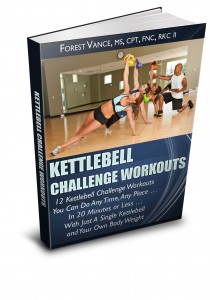
Kettlebell Challenge Workouts Contest Winners + Special Offer (3 days only)

Huge thanks to everyone who entered the Kettlebell Challenge Workouts give-away contest … I was seriously shocked by the response.  As I write this, we have a total of 99 comments on the entry post!

My assistant wanted me to pass along that she had a really tough time picking the winners.  And I totally agree – there were SO many amazing entries, and I want you to know that I appreciate each and every one of you who entered the contest.

We ended up choosing Alia & Jeff … so keep an eye out, I’ll be sending you both info on how to grab your free copies of the full program shortly.

Now, if you didn’t win, no worries … the Kettlebell Challenge Workouts program is now officially available, and we’re having a special promotion to kick things off.  You can grab the full program for over 50% off for the next 72 hours or so.

Head over, get all the details and grab your copy now by clicking the link below:

=> Kettlebell Challenge Workouts special offer

Thanks and have a great weekend –

Forest Vance, MS, CPT, RKC II