[video] 45-Sec Pull Up Trick for More Reps

Pull ups are one of the best all-around moves for increasing your upper body strength and overall fitness level.

They are a natural movement pattern of human beings!, not to mention basic and old-school.

When it comes to cranking out more, small form tips like the one we cover in today’s video can make a huge difference.

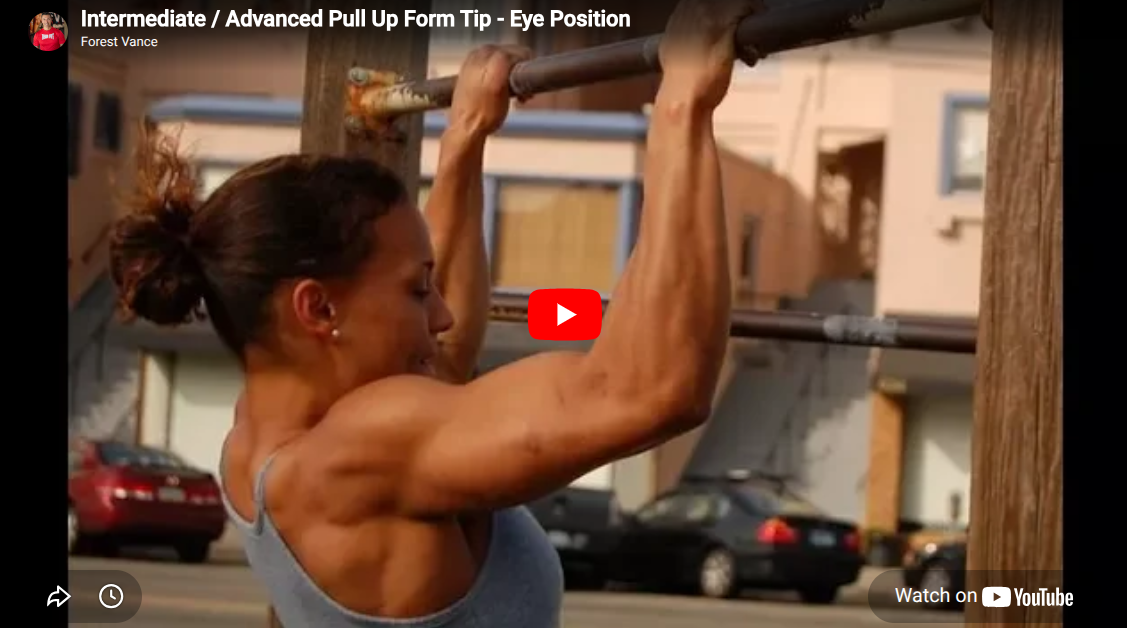
Today’s tip is about your eyes – that is, where you are looking during the exercise – and how that impacts the position of the rest of your body during the movement, the muscles you end up activating, and the “rhythm” you get into during your set.

-> (video) 45-Sec Pull Up Trick for More Reps

Watch the video, try the tip in your next pull up workout, and let me know how it helps!

– Forest Vance
Master of Science, Human Movement
Certified Personal Trainer
KettlebellBasics.net

PS – If you’re stuck and can’t seem to make progress towards your pull-up goals, odds are you’re performing exercises that will NOT improve your ability to perform more pull-ups. Exercises such as:

  • Lat Pull Downs
  • Band-Assisted Pull-Ups
  • Machine-Assisted “Gravitron” Pull-Ups

Do NOT have much, if ANY, carry-over to actually helping you to do more pull-ups.

(Don’t get me wrong – these are fine exercises in their own right, and I use them regularly in my programs!… it’s just important to know that they are not necessarily going to help you do more pull-ups, if that is your goal.)

If you want to improve your pull-ups, here’s what I recommend you try instead:

-> Operation Pull Up

It’s a complete 28-day pull-up mastery system designed for people 40+ who want to go from zero to 20 flawless reps.

Here’s how it’s set up:

1 – You start at the right phase for YOUR current level. There are 6 progressive phases total — so whether you’re just getting started or already cranking out a few reps, there’s a clear starting point for you.

2 – You follow a simple day-by-day plan with follow-along videos and PDF guides — no guesswork, just a system that works.

I developed this program using the same progressive principles I’ve used with hundreds of clients to build pull-up strength the right way, layer by layer.

If you are looking to do more pull-ups, this is the most direct path I know of to get there.

However, this is your last chance to get the course at “original” pricing – after this, the price goes up.

Details and order now at the link below:

-> Operation Pull Up — 28-Day Pull-Up Mastery System

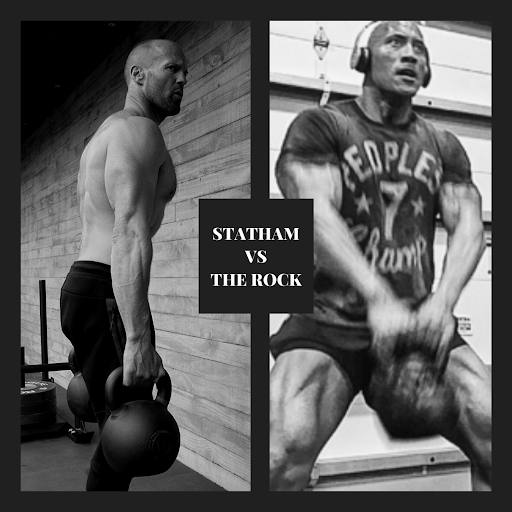
The Rock vs. Jason Statham (sample KB/BB Hybrid workout inside)

Two of the most popular pieces of equipment in the gym are the kettlebell and the barbell.

They both have their own unique benefits. But most people train with one or the other — rarely both.

And here’s what I’ve seen play out over and over again with the traditional bodybuilding crowd:

They’re jacked. Big. Strong-looking. Think:

  • The Rock
  • Ronnie Coleman
  • Bodybuilders
  • Guys who follow bro splits and live on chest-and-bis day

But when it comes time to press a barbell overhead into a good position, or squat to depth while maintaining a neutral spine … a lot of them can’t do it. The mobility isn’t there. The strength in the right places isn’t there.

On the flip side, think:

  • Jason Statham
  • Bruce Lee
  • Gymnasts
  • Wrestlers
  • First responders

They move well. They’re strong AND athletic. They stay lean without sacrificing muscle.

That’s the whole idea behind blending the two together.

Enter Hybrid Kettlebell Muscle 2.0.

This workout combines the best of both worlds to help you build strength, lose fat, and get in the best shape of your life.

Try the sample workout below, then grab your copy of HKM 2.0 at the link while it’s on sale for my birthday week:

–>> Hybrid Kettlebell Muscle 2.0

—–

Hybrid KB/BB Workout – (Phase 3 – Workout B)

PART 1 – Deadlift – 4 sets of 5 reps – rest 2-3 mins between sets

*Full weight recommendations/periodization breakdown in full program HERE

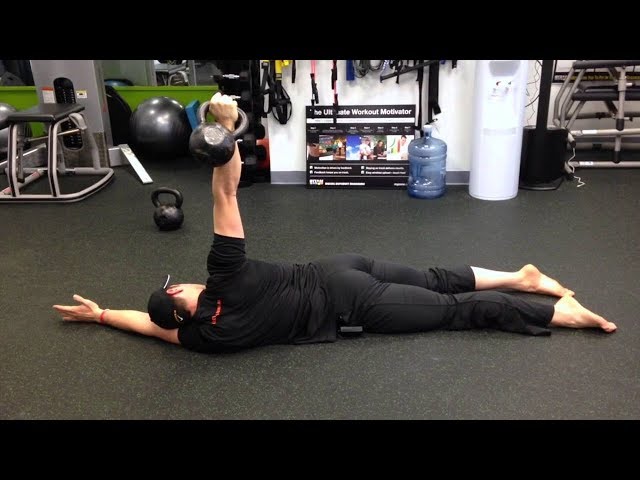
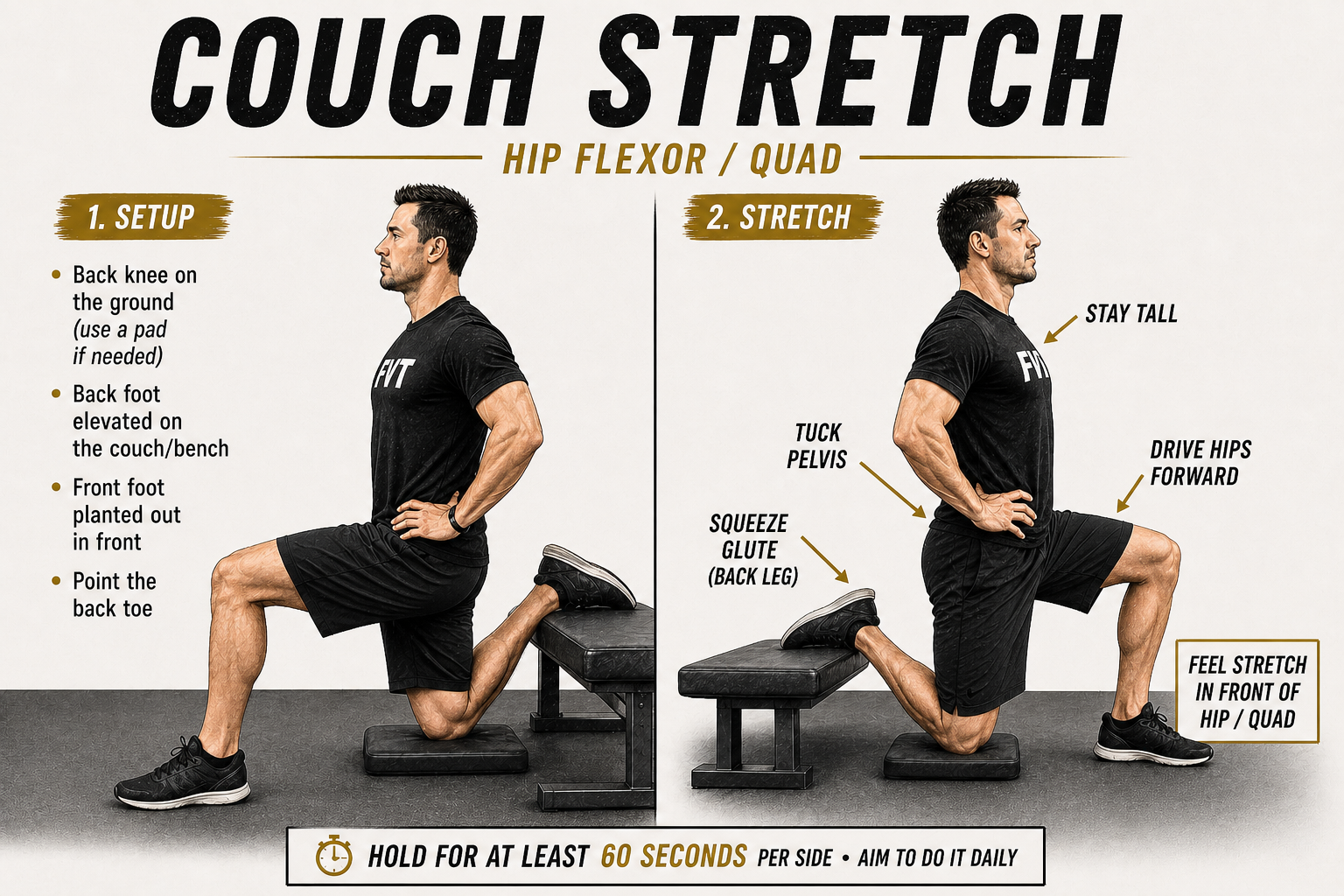
Between sets, do 1) weighted dead bugs 2) kneeling flexor mobilization

PART 2 – Military Press – 4 sets of 5 reps – rest 2-3 mins between sets

*Full weight recommendations/periodization breakdown in full program HERE

Between sets, do H2H KB swings – 8 reps per side

PART 3 (8 mins) – Do as many reps as you can of each exercise in 45 seconds. Rest for 15 seconds between exercises. Rest for one minute between rounds. Do three rounds total:

  • 1 arm KB press (switch sides halfway)
  • Walking KB tactical lunges
  • 3-way push-ups (15 secs narrow / 15 secs wide / 15 secs regular)
  • Seal jacks

—–

If your only goal is to be big, strong, and jacked, a traditional bodybuilding approach will get you there. I’m not knocking it.

But if you want to get strong AND muscular, while staying lean, athletic, and mobile at the same time — that’s a different program. That’s Hybrid Kettlebell Muscle 2.0.

Attempt this Frankenstein workout, then grab your copy — but hurry, this deal ends!

-> Hybrid Kettlebell Muscle 2.0

— Forest Vance
Master of Science, Human Movement
Kettlebell Expert
Over-40 Specialist
KettlebellBasics.net

Hybrid Kettlebell Muscle vs. Bodybuilding [worth printing this out]

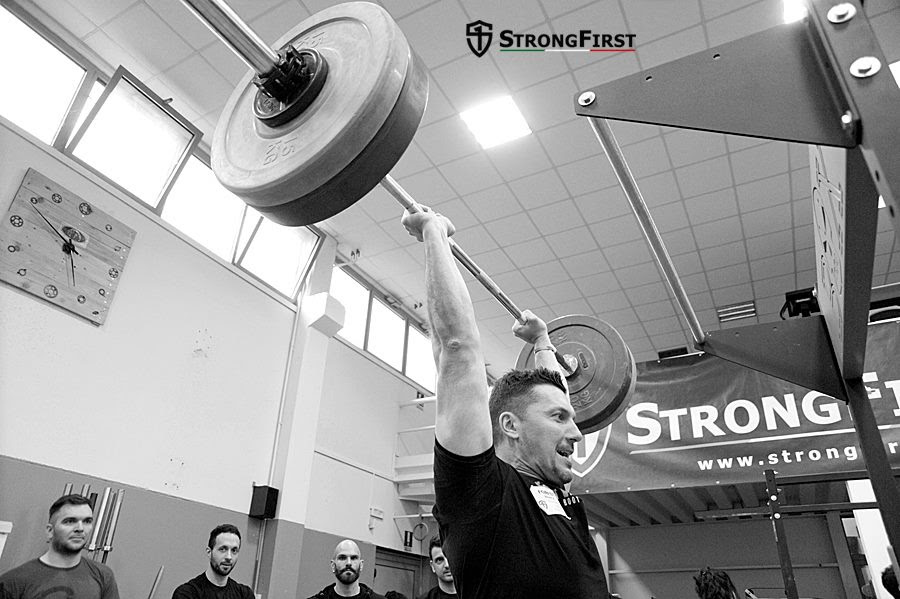
Back in 2018, I traveled to Italy to certify as a StrongFirst Lifter (SFL).

Amazing trip. One I’m still grateful for to this day.

But here’s one thing I remember most:

Watching the other participants train was fascinating. You could pretty quickly tell who had been doing what leading up to the cert.

Group one: folks who had been training with a blend of kettlebells, barbells, and bodyweight—a hybrid approach. When it came time to perform the required lifts (Zercher squats, front squats, back squats, good mornings, deadlifts, bench press, military press), they moved well. Solid form. They passed.

Group two: folks who had been taking a more traditional bodybuilding approach—lots of isolation work, splitting body parts across different days, machines, etc. And here’s the thing—they were JACKED. Big. Strong-looking.

But when it came time to press a barbell overhead into a good position, or squat to depth while maintaining a neutral spine … a lot of them simply couldn’t do it. The mobility wasn’t there. The strength in the right places wasn’t there. And a lot of them didn’t pass the technique tests as a result.

That was 2018. Eight years later, I see the exact same thing playing out with my clients and online members—and the lesson is just as relevant.

Now—if your only goal is to look good in a mirror, a traditional bodybuilding approach will get you there. You will build bigger muscles. I’m not knocking it.

But if you want to get strong AND muscular … while staying lean, athletic, and mobile at the same time … that’s a different program.

That’s Hybrid Kettlebell Muscle 2.0.

HKM 2.0 is built around combining the classic barbell lifts (squat, bench, deadlift) with kettlebell training—in a way that produces real, lasting results. Strength, muscle, conditioning, and mobility. All together, not traded off against each other.

And this week — it’s my birthday week, so I’m doing what I always do and giving YOU the gift — when you grab HKM 2.0 right now, you also get three additional programs completely free:

  • 28-Day Bulletproof Shoulders Challenge
  • Kettlebell / Bodyweight Hybrid Strength Training (the 3/7 method)
  • Hybrid Kettlebell Muscle 1.0 (the original program)

This is a deal I’m running for my birthday, so grab it while it’s at its lowest.

Grab HKM 2.0 + all three bonuses here <<

Here’s to getting strong and muscular while staying lean, athletic, and mobile—all at the same time!

— Forest Vance, MS
Kettlebell Expert
KettlebellBasics.net

How I stopped thinking like a F*t O-Lineman

Yesterday, I talked about how playing offensive line wired me wrong around food.

From age 14 through 25, I force-fed myself as much as possible, honestly, a good portion of the time. That was the job. Not healthy — but that was what the job required.

And then I retired from my football career. Started trying to get healthy and drop some lbs. And here’s how it played out:

I’d have a meal plan.

I knew my calories, I knew my protein target, I knew what a solid day of eating was supposed to look like.

And I’d do pretty well with it — for a day, maybe two.

And then I’d have a long day at work, get tired, get stressed, etc., and go off the plan.

Maybe I’d eat an entire bag of chips before dinner. Maybe I’d just hit the drive-through instead of eating what I had planned.

And then it would start — why did I do that? What is wrong with me? I know exactly what I’m supposed to be doing – but I just can’t seem to follow through.

And then I’d fall off the plan for a couple of days before dragging myself back to it.

Sound familiar?

Here’s what I eventually figured out was one thing going on underneath all of that.

The meal plan wasn’t the problem.

Now I DID need the meal plan. Knowing your calorie target, your protein target, what a solid day of eating looks like — that foundation matters.

But something was missing on top of it.

And that missing piece was identity.

In my own words — and this is not a politically correct way to put it, but it’s honest — I was thinking of myself as a “fat offensive lineman”. That was the identity running in the background. And no meal plan overrides that. You can white-knuckle it for a few days, but eventually your behavior follows your belief about who you are.

(And obviously, that’s not a nice way to talk to yourself. I would never say that to someone else. Just to myself. Which — honestly — is something I’ve also gotten a lot better at through this whole process.)

If any of this is resonating and you already know you’re in, you can grab one of the 12 spots right here -> SIGN UP FOR THE MINDFUL EATING SUMMER RESET

Otherwise, keep reading — because here’s where it gets interesting.

James Clear lays this out in Atomic Habits. His core idea is that you don’t change by focusing on goals. You change by focusing on identity — who you believe you are. And you build that identity through small consistent actions that each act as a vote for the person you want to become. No single action transforms you. But the votes stack up. And as they stack up so does your belief about who you are.

So here’s the practical takeaway from that.

Every time you make a small good choice around food — eating a little slower, stopping when you’re full, choosing the slightly better option — that’s a vote. You’re not trying to be perfect. You’re just stacking votes for the person you want to become. Over time, those votes build the evidence that you are, in fact, someone who takes care of their body.

That’s the foundation of what we build over six weeks in the Mindful Eating Summer Reset — in a small group setting with real coaching and real accountability.

If you’ve already worked with me and have a meal plan, bring it. We’ll use it or freshen it up as part of the program. If you don’t have one we’ll get you set up. But then we stack the psychology on top — the identity work, the behavior patterns, the stuff that actually determines whether the plan works long term.

This is capped at 12 people total. Once those spots are gone, registration closes. If you’re ready to do this differently — not just follow another plan, but actually change how you think about food and who you are around it — grab your spot here.

-> SIGN UP FOR THE MINDFUL EATING SUMMER RESET

— Forest

PS – Spots are going fast. If you’ve been on the fence, now is the time. GRAB YOUR SPOT HERE.

Worst exercise for back pain (that everyone does)

**Quick note before we dive in: if you’re looking for a complete, kettlebell-friendly core program that’s easy on your back and takes 8 minutes or less per day, check out my 28-Day Lower Back Fix -> 8 Minute Lower Back Fix

I was chatting with a client the other day.

He was struggling with some nagging lower back pain.

He was training consistently with kettlebells — which is great! — but then potentially undoing all that good work with a high-rep sit-up finisher after most every session.

Now. I am not a medical professional, and this is not medical advice. If you already have significant back pain, it is recommended to consult a physical therapist before starting a new exercise regimen.

HOWEVER.

Sit-ups and crunches are generally not recommended for back pain, as they can cause significant spinal disc pressure through repetitive flexion, potentially aggravating injuries.

More specifically, according to Harvard Health, this is because of things like:

— Repetitive Flexion: Bending the spine forward repeatedly creates immense compressive pressure on spinal discs.
— Hip Flexor Strain: Sit-ups heavily involve the hip flexors, which, when tight, pull on the lower spine, causing discomfort.
— Poor Posture: Many individuals perform them with improper form, increasing risk.

Now — can you get away with doing sit-ups and crunches and potentially be fine? Maybe.

However — why not do what we know is best from a research perspective — especially when kettlebell training already builds serious core strength the right way?

Better Alternatives for Core Strength

— Planks: Considered the gold standard, these build stability without stressing the spine. In the 8-Minute Lower Back Fix, we do different plank variations — side plank supported (in a specific way), HardStyle (high body tension as you get stronger), and more.
— Bridges: These strengthen the core and glutes while keeping the lower back supported. Specific setups using things like blocks and bands to assist can help greatly.
— Bird-Dog: A safe exercise on hands and knees that improves stability by working the core and back together. This can start at a lower level and progress to different ways to add resistance.
— Dead Bug: Lying on the back, this exercise challenges the core without loading the spine. Same here — can start with lower-level versions and progress up to added weight and more. All things we cover in the 8-Minute Lower Back Fix.

And in my non-medical opinion — based on what the research generally suggests — it’s worth considering stopping sit-ups and crunches and exploring some of the alternatives covered in today’s email instead, especially if lower back pain is something you’re managing.

As always, consult a qualified medical professional before making changes to your exercise routine, especially if you are managing an existing injury or condition.

If you want to check out my complete program that includes exercises like these and many more, organized into a short (8 minutes or less) daily routine that’s a full 28-day challenge, check out:

-> 8 Minute Lower Back Fix (kettlebell-friendly, back-safe core training)

Cheers!

— Forest

20-min Tactical KB/BW Circuit

When I first moved to Kansas City about four years ago, I started training at a gym where most of the members were either bodybuilders or powerlifters.

One of them was a first responder — also an elite lifter. In his late 40s, still one of the strongest guys in any gym he walked into.

But he told me something that stuck with me:

“When it came to certain things I had to do on the job, I’d gas out.”

He told me he was rethinking his whole approach — more functional training, more conditioning, more focus on the core and posterior chain, and stretching, bodyweight work, and even some yoga-style movements.

I’ve heard the same story from many law enforcement guys I’ve trained over the years.

Strong isn’t always ready.

So that’s exactly what Mission Ready Conditioning is built around — the ability to perform anywhere, under any conditions, with whatever you have available.

Here’s a sample workout from the program:

—–

20-min Tactical KB/BW Circuit

Part 1 — AMRAP 15 minutes (rest as needed to maintain form)

— Kettlebell Tempo Goblet Squat — 3 sec down, 1 sec hold, 1 sec up — 10 reps
— Paused Push-Ups — lower down, pause 1 second at bottom, press up — 10 reps
— Kettlebell Swings — 15 reps
— Reverse Lunges — 10 per leg (add KB in suitcase position to level up)
— Base Switches — 8 per side

Part 2 — 3 rounds: 30 sec work / 15 sec rest

— Jumping Jacks
— Mountain Climbers
— Jump Squats
— Hand Release Push-Ups

—–

That’s just one workout from one of the 10 training plans inside the Mission Ready Conditioning bundle. Here’s everything else you get:

— No Kit Fat Loss Protocol — Zero Equipment Fat Loss Plan
— Field Ops Conditioning — Road Warrior Workout
— Zero Kit Operator — No Gym No Excuse (Updated Edition)
— Operator Pull-Up Protocol — 0 to 20 Pull-Ups
— Combat Core Conditioning — 5-Minute Abs
— Tactical Firebreather — HIIT + Endurance Hybrid
— Operator 100 — Mission 100 Push-Ups
— Iron Operator Circuit — KB + Bodyweight Beatdown
— Field Power Protocol — KB + Bodyweight Power Circuit
— Tactical Challenge Series — 33 Kettlebell Challenge Workouts

Whether you’re in uniform, a first responder, a veteran, or just someone who wants to stay ready and bulletproof — this is built for you.

This offer is winding down. I’m sending my last emails on it this week, and I didn’t want you to miss out without one more shot.

Click here to grab Mission Ready Conditioning →

Still at a great price.

Any questions, just hit reply!

Talk soon,
Forest

“Alarm Drop” 18-Minute Zero-Equipment EMOM

Tactical operators are in amazing shape.

They’re lean, strong, and athletic… and they perform at a very high level.

But if you look at how they train, it’s actually the opposite of what most people think.

When most men and women think about getting stronger, they picture spending hours in the gym training like a bodybuilder… chasing bigger muscles and pumping everything up.

And there’s nothing wrong with that.

But if you train that way, you’ll usually end up strong… and also pretty bulky.

Puffy muscles.
Not especially fast.
Not especially athletic.

That’s great if your goal is to look huge.

But most of the people I talk to would rather have the lean, athletic, capable look instead.

The kind of strength that lets you move well, perform anywhere, and stay in great shape year-round.

That’s what Mission Ready Conditioning is all about.

Here’s a sample workout from the program — zero equipment required.

—-

“Alarm Drop” 18-Minute Zero-Equipment EMOM

— Set a timer for 18 minutes.

— Every minute on the minute perform the exercise listed below.

–Rest whatever time remains in the minute after finishing the reps.

— Complete 3 rounds.

Minute 1 — Seal Jacks (jump jacks w hands to the sides -> drive the heart rate up)
40 reps

Minute 2 — Tactical Get-Ups (start flat on your back → stand up quickly → return to the ground)
10 reps (5 per side)

Minute 3 — Bear Crawl (from all 4’s – focus on opposite arm / leg motion)
20 steps total
10 forward / 10 backward

Minute 4 — Shoulder Tap Push-Ups (Push-up → tap right shoulder → tap left shoulder)
12 push-ups + shoulder taps

Minute 5 — Stair Climber Lunges (step back → drive the knee up with power on every rep)
10 reverse lunges per side

Minute 6 — Burpee Broad Jumps (burpee → explode forward into a broad jump → reset and repeat)
6 reps

Then go back to Minute 1 and repeat until the 18 minutes are complete.

—–

If you want to look and perform like a tactical operator, you need training that’s properly structured — where every workout brings you a little closer to your goal.

That’s exactly what Mission Ready Conditioning delivers. 10 complete programs, bodyweight-based, one optional kettlebell.

–>> Mission Ready Conditioning — get it here

To your success! —

— Forest Vance Master of Science, Human Movement | Master Kettlebell Instructor ForestVanceTraining.com

my 5 Top KB Swing Hacks (list inside)

One thing that’s generated a lot of interest in 2026 so far is coaching people on the basics of safe and effective kettlebell training.

Kettlebells are incredible tools — fat loss, improved health markers, lean muscle, stamina, mobility, and flexibility.

But you do want to understand the basics of training with them safely and effectively, both to get the most out of your sessions and to avoid injury.

Here’s the thing: whether someone has been training with kettlebells for years or has never picked one up, I always start them in the same place — the swing.

The swing is the foundation. It’s the movement that underlies all the other ballistic kettlebell lifts — cleans, snatches, you name it. Get your swing dialed in, and everything else becomes easier to learn.

So here’s the exact progression I use with new clients:

—–

If you want to go deeper, I have a full one-hour kettlebell swing workshop where I walk through all of this and more — it’s essentially a personal training session with me, on video. It was recorded live over Zoom, so you get to see real-time coaching, real questions, and real corrections. That workshop is included as a bonus in the Kettlebell 500 Protocol — 28 Day Challenge — and honestly, the cost of the challenge alone is probably worth it.

Kettlebell 500 Protocol — 28 Day Challenge 

—–

  1. Face-the-Wall Squat

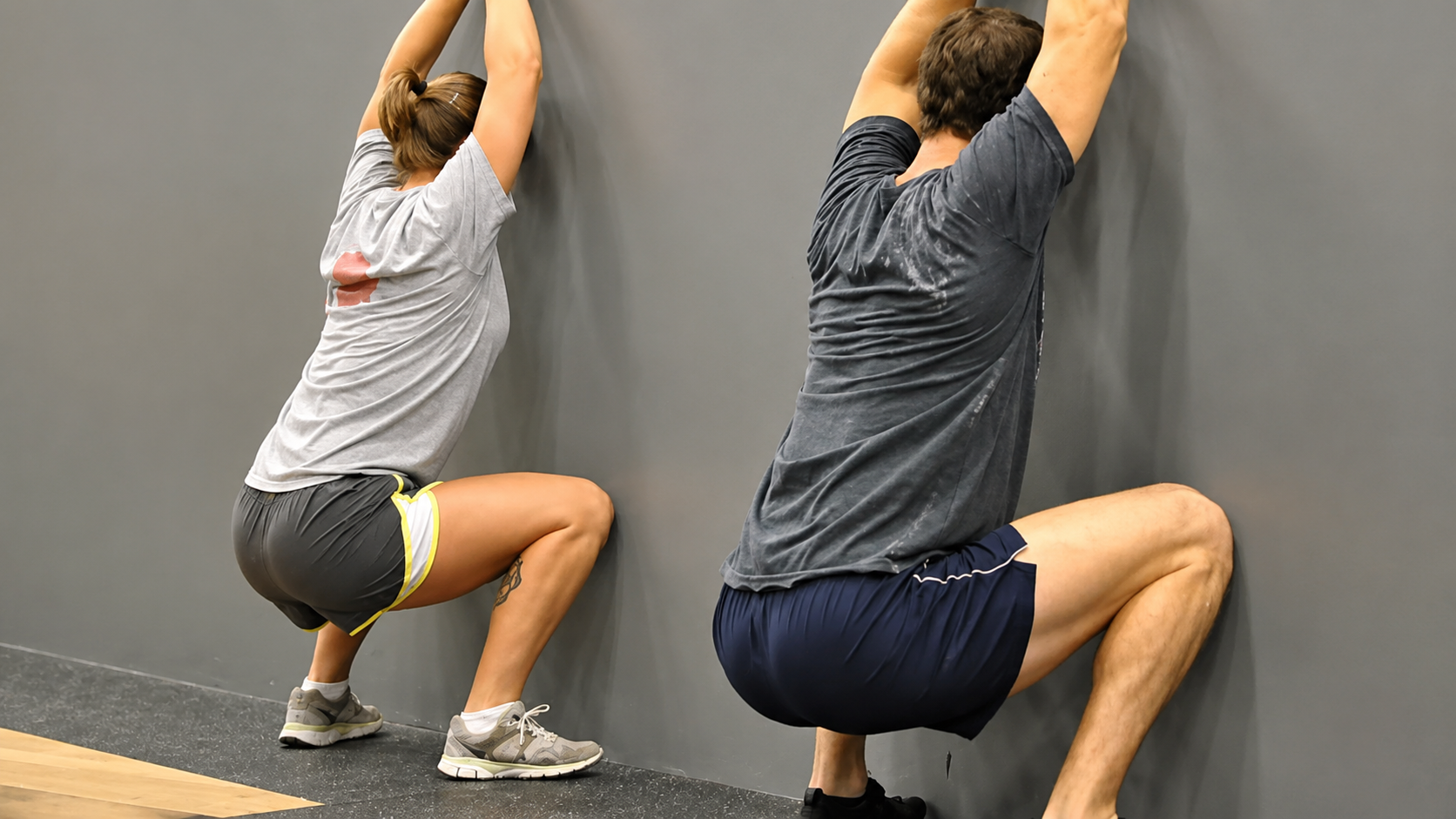
Grab your kettlebell, place it a couple of inches from the wall, and face toward the wall. Your goal eventually is to squat with your toes touching the wall — but start with your feet a couple of feet back. The bell goes between your feet. Focus on staying upright, shoulders back, no twisting or collapsing forward. Do a few reps.

  1. Face-Away-from-Wall Hip Hinge

Now turn around. Step a bit further from the wall and face away from it. Same setup — bell between your feet. This time you’re hinging at the hips, pushing your butt back toward the wall until you tap it, then standing back up. Stand far enough that you really have to reach those hips back — you should feel a solid stretch in your hamstrings. A few reps here.

  1. Deadlifts (No Wall)

Come away from the wall and repeat the same hip hinge movement — just you and the bell now, in open space. Clean this up, own the pattern.

  1. Half Swings

Step back from the bell so it’s slightly in front of your feet. Hike it back like a football snap, then drive your hips through. That’s the focus — the hip snap. Let the bell float up (maybe waist height), but don’t worry about how high it goes. This is not an arm lift. Just hips.

  1. Full Swings

Same movement, just snap those hips a little harder and let the bell travel higher. From here, you’re swinging.

—–

Now, this is the clean version of the progression. In reality, we often add in drills along the way — towel swings to take the arms out of it, band work to reinforce the hike pass, glute bridges to wake up the glutes. It’s rare that someone has a perfect swing right out of the gate.

If you want to go deeper, I have a full one-hour kettlebell swing workshop where I walk through all of this and more — it’s essentially a personal training session with me, on video. It was recorded live over Zoom, so you get to see real-time coaching, real questions, and real corrections. This is the kind of session I typically charge a few hundred dollars for as part of one of my monthly coaching programs.

That workshop is included as a bonus in the Kettlebell 500 Protocol — 28 Day Challenge — and honestly, the cost of the challenge alone is probably worth it.

Kettlebell 500 Protocol — 28 Day Challenge 

If you want to work with me one-on-one, in person or over Zoom, I do offer individual training sessions — but they come at a higher cost since it’s my direct time.

But whether you sign up or not, I hope this progression gives you something useful to work with.

Let’s make it a great week!

— Forest

“Steel Mace Sunday” (sample workout inside)

Happy Sunday!

One of my favorite parts of my morning routine is when I have the time to do some steel mace work.

This is why our 28-Day Steel Mace Flow Challenge starts tomorrow, and I wanted to give you a taste of exactly what it looks like.

Now, a 7 or 10-pound steel mace works great for this. If you’re brand new and don’t have one yet, even a broomstick can offer surprising benefits for practicing movements and building mobility.

Two Ways to Run the Challenge

Option 1 — Add-On Format

One session per day, done first thing in the morning, tacked onto the end of your existing workouts, etc. Each session runs 5–10 minutes. Train 6 days per week, rest on Day 7. This keeps your current strength training intact while layering in rotational strength, shoulder stability, and conditioning.

Option 2 — Standalone Format

Two sessions back-to-back, 3 days per week (Monday, Wednesday, Friday). Total session time is 20–30 minutes. This is a dedicated steel mace training block — one tool, one focus, all 28 days.

Here’s a Sample — Days 1 & 2

Day 1 — Lower/Core Focus

30 seconds work / 15 seconds rest — 3 to 5 rounds

  • Hinge Rotate Press (Right)
  • Hinge Rotate Press (Left)
  • Reverse Mace Lunge (Right)
  • Reverse Mace Lunge (Left)

Do this as a finisher on its own, OR combine it with Day 2 for a full standalone session:

Day 2 — Upper Focus (EMOM)

6–10 minutes, every minute on the minute:

  • Minute 1: 12 Steel Mace 360s per side
  • Minute 2: 7 Burpees

Alternate back and forth for the full duration.

The full 28-Day Steel Mace Flow Challenge kicks off tomorrow, Monday, March 2nd, and you can still jump in and do it live with us.

Click the link below to get all the details and reserve your spot:

–>> 28-day Warrior Mace Flow Challenge – Starts Monday, March 2nd

Enjoy your Sunday!

— Forest

“The Berserker” – 5 Min Mace / KB Finisher

You lift. You show up. You work harder than 90% of the people you know.

But there’s still a layer of fat sitting over your muscle that won’t budge.

And deep down, it drives you crazy.

Because you’re doing a lot right right!

But when you take your shirt off — or catch yourself in a mirror — it’s still there.

Soft around the middle, and blurring the definition you’ve worked hard to build.

And the worst part?

You have a good idea why:

You’re not getting your conditioning in.

Not really.

Maybe you run occasionally. Maybe you throw in a metcon every few weeks. But the consistent, regular conditioning work that actually strips the fat off your hard-earned muscle?

It’s not happening.

And it’s not happening because every format you’ve tried either wrecks your joints, eats into your recovery, or requires you to completely overhaul the training you actually love.

So you keep lifting. You keep eating well. And that layer stays right where it is.

I want to show you something today that changed this for me — and for a lot of the guys I train.

This is a 5-minute steel mace (or kettlebell) Finisher that you can take on to the end of whatever you’re already doing.

It’s just one move – but it gives you an idea of why this type of training is so unique and effective.

It’s the exact approach we use in my 28-day Mace Burn Challenge.

And it hits your conditioning hard enough that your body starts responding in ways that longer, slower cardio never delivered.

#

“The Berserker” – 5 Min Mace / KB Finisher

This is a compound movement that chains a full rotational swing into a deep loaded squat and cross-body reach. Every major muscle group fires at once. Your heart rate spikes. Your core works overtime.

Done for a few rounds at the end of your workout, it creates the kind of metabolic disturbance that burns fat for hours after you’re done — not just during the 5 minutes you’re working.

How to do it:

Start standing, feet shoulder width, mace held at the base of the handle with both hands close together.

Step 1 — Perform a mace 360.

Step 2 — As the mace returns to the front, flow directly into a squat. At the bottom, reach the mace head down and across your body to touch your opposite foot. Swing right, touch left foot.

Step 3 — Drive back up to standing. That’s one rep.

Do 5 reps per side every minute, on the minute, for 5 minutes.

Can you do it with a kettlebell?

Yes — hold it by the horns and mimic the circular swing before dropping into the squat and touch.

But the mace is genuinely better here. The offset weight creates real rotational load through the full arc — your core, shoulders, and grip are fighting to control it the entire time.

#

Give this a try, and you will see the power of the steel mace for rapid conditioning and fat burning, instantly!

Then go check out my 28-day Mace Burn Challenge HERE.

– Forest

PS – The 28-Day Mace Burn Challenge kicks off March 2nd. If you’re tired of that stubborn layer of fat hanging around despite all the work you’re putting in — this is the missing piece. Learn more here.