I was chatting with a client at my studio this morning after a kettlebell workout.
He told me his goal was to drop about 10 pounds over the next month or so to get ready for some things coming up at the end of the summer.
I recommended my “500 Kettlebell” protocol.
In a nutshell, here’s what it looks like:
1. Do high-output KB workouts that burn 500 calories (give or take), 3 times per week.
The KB class he had just done would qualify. A home-based KB workout (like the progressive programming I give you in the 500 Kettlebell Protocol program) would as well.
Big thing: a smartly designed, progressive kettlebell workout, appropriate for your fitness level, done 3x per week.
2. On your non-KB days, ruck, sprint, or do some other kind of conditioning that burns 500 calories.
We are prepping for a 5K ruck at our studio as part of an event we are putting on in the fall, so working toward that was perfect for my client. Three times per week of 500-calorie-ish rucking.
You could also do something like the 500 Calorie Engine Builders for active build days. Various options depending on your preference. If you want low-impact, I’ll give you options like walking. If you want something more dynamic or higher-intensity, I’ll give you sprint intervals. Big ideas designed to burn an extra 500 calories per day through activity.
3. Cut 500 calories from your diet each day.
I recommended he start with things like creamer in his coffee, chips at lunch, and his giant serving of pasta for dinner, plus dessert.
For you, it might be sugary snacks, or the beers at night, or whatever else.
The goal is to CONSISTENTLY cut 500 kcals from your daily diet.
You’ll learn my 500 Cut Method nutrition plan. This is a guided nutrition system that helps you eliminate up to 500 calories per day without a starvation diet or cutting every food you enjoy.
Follow this plan, and you will:
- BURN an extra 500 kcals/day
- Consume 500 kcals LESS/day
- Get into a 1000 kcal deficit/day
- Get into a 7000 kcal deficit/week
- Lose about 2 pounds per week (3500 calories in a pound)
If you want to lose about 10 pounds over the next month, follow this.
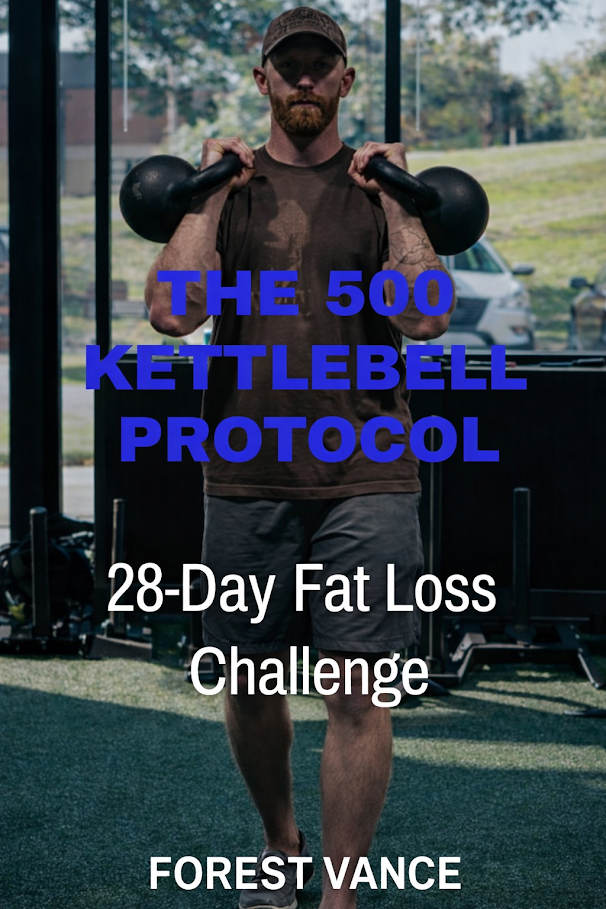
And if you want the full done-for-you version, plus a shot at dropping a full clothing size in 28 days, grab my 500 Kettlebell Protocol while it’s on Summer Shred sale this weekend:
-> 500 Kettlebell Protocol Summer Shred Sale
Here’s to feeling like a lean, mean machine this summer!
— Forest Vance – creator, the 500 Kettlebell Protocol