One of the best things about kettlebells is this:
You can get a real, full-body, legitimate workout in a very short amount of time.
Strength.
Conditioning.
Heart rate up.
Muscles worked head to toe.
All with one kettlebell… maybe two.
For example, here’s a 15-minute Spartan Sprint workout:
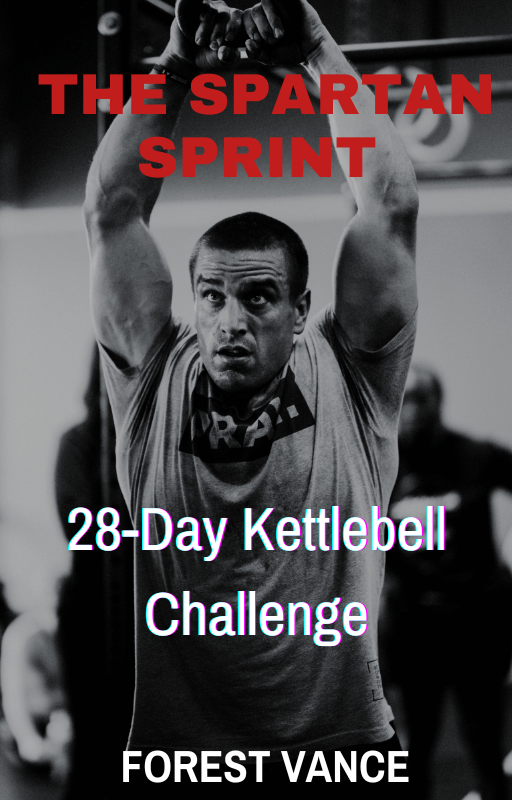
(from the “Spartan Sprint” 28-day KB Challenge)
As many rounds as possible in 15 minutes of:
- 10 goblet squats
- 10 rows per side
- 10 push-ups
- 15 swings
In 15 minutes you’ve trained:
- Legs
- Glutes
- Back
- Chest
- Shoulders
- Grip
- Core
- And your engine
That’s the power of a well-designed kettlebell session.
Now imagine building an entire 28-day challenge around workouts like that.
That’s exactly what Spartan Sprint is.
These workouts aren’t random or slapped together.
They’re progressive, intentional, and structured.
You train 4–6x per week, for 15 minutes per session.
Some days are AMRAPs.
Some days are EMOMs.
Some days emphasize strength.
Some days push conditioning.
Different formats.
Different muscle emphasis.
All fitting together.
And here’s the simple math most people overlook:
The American Heart Association recommends 75 minutes of high-intensity training per week.
Five 15-minute sessions gets you there.
Strength.
Cardio.
Conditioning.
All covered.
If short, effective kettlebell workouts are something you’ve ever wanted — this is exactly that.
These are new, never-before-released sessions built specifically for the 15-minute format.
You also get:
- Warrior Flow Isometrics
- Feed the Beast: Modern Day Warrior
- The CORE Kettlebell Challenge book
- The original 300 Kettlebell Challenge (legacy bonus)
It’s a lot of value for a simple commitment.
You can check out all the details here:
–>> 15-minute single kettlebell workout
– Forest