McGill Curl-Up

Let’s talk about something you’ve probably heard a million times:

“If your lower back hurts, you need to strengthen your core.”

That advice is 100% true… but most people interpret it completely wrong.

They hear “core” and think crunch machines, sit-ups, planks for 2 minutes, hanging leg raises, ab wheels, or “burn the abs!”- type stuff.

Now — before I go any further — there’s nothing wrong with those movements if your goal is visible abs. If you’re bodybuilding or trying to look like a cover model, those exercises can absolutely help you build the muscles that show.

But here’s the mistake:

“Show core” (your six-pack) is NOT the same thing as your “go core” (your deep stabilizers).

Your six-pack muscles flex your spine, making your abs look good.

Your deep-core muscles stabilize your spine, protect your lower back, and keep you strong when you hinge, squat, rotate, carry, or lift anything heavy.

And these two systems are VERY different.

This is where people get tripped up. They hear “strengthen your core for lower back health,” then go hammer a bunch of crunches or sit-ups, never touch the deep stabilizers, and wonder why their back still feels stiff, cranky, or vulnerable.

Here’s the truth: if you want to fix or prevent lower back pain, you need a stable spine, not a flexed one.

This is exactly what world-renowned spine researcher Dr. Stuart McGill teaches. His focus is on anti-movement: anti-extension, anti-rotation, anti-lateral flexion.

Meaning: your core’s job isn’t to curl forward (like a crunch). It’s to resist movement so your spine stays safe under load.

And one of McGill’s most effective neutral-spine exercises is the McGill Curl-Up.

Most people know the basic curl-up, but the McGill version is completely different. It’s not a flexion exercise at all — it’s a neutral-spine stability drill designed to keep the lower back from bending.

Key aspects of the McGill Curl-Up:

It maintains lumbar neutrality: the goal is to keep the spine in its natural neutral curve and avoid bending or flattening the lower back.

Hands under the low back provide feedback so you can feel if the spine is trying to move.

You lift your head and shoulders only slightly by engaging the core — not by curling the torso forward.

It focuses on spinal stability and stiffness, strengthening the core in a way that protects the spine instead of bending it.

How to perform it:

— One leg straight, one knee bent
— Hands under the small of your back
— Lift only your head and shoulders slightly off the ground
— Hold for 10 seconds

You’ll feel this in the deep stabilizers that actually protect your spine—not your six-pack.

This is the kind of “go core” work that actually fixes lower-back tightness and makes you more resilient during deadlifts, swings, squats, rows, runs, and even just bending over to pick up a sock.

It’s the difference between having a body that looks strong… and a spine that moves strong.

And this is just ONE example of what we build into the 8-Minute Lower Back Fix.

The program blends McGill-style core stability, hip mobility, controlled movement, activation drills, breath mechanics, and yoga-based resets into a routine that takes less than 10 minutes a day.

If you want the follow-along videos, daily sequences, and the whole 28-day progression, you can grab it here:

-> 8-Minute Lower Back Fix (on sale this week)

Talk soon,
Forest

Kettlebell Inferno: Tabata-Complex Edition (sample workout inside)

Why is this a “tabata-complex” workout?

Because it combines the science-backed tabata training method with the muscle-and-fat-loss-burning power of complex training.

Whether you want to drop stubborn weight, perform better in your workouts, or just feel strong and athletic again, this approach gets you there—fast.

**For a limited time only, when you grab the new Kettlebell Tabata Trifecta bundle, you’ll get all three programs (1.0, 2.0, and 3.0)—plus my 16/8 Intermittent Fasting Workshop –>> Learn more here

This kettlebell protocol delivers massive results in minimal time—helping you build muscle, shred fat, and level up your conditioning in as little as 20 minutes a day.

Here’s a sample workout you can try today:

Kettlebell Inferno: Tabata Complex

PART 1 – TABATA

  • 20 seconds: KB goblet squats (recommended weight = 12-16k women / 20-24k men)
  • Rest: 10 seconds
  • 20 seconds: KB renegade rows (switch sides/hands each rep; single KB, recommended weight = 8/12k women / 16-20k men)
  • Rest: 10 seconds Repeat four sets.
  • Rest 1-2 minutes.
  • Then repeat for a total of 2 Tabata rotations.

PART 2 – TABATA

  • 20 seconds: Two-hand KB swings (recommended weight = 16-20k women / 24-32k men)
  • Rest: 10 seconds 20 seconds: “RKC plank” (hold tight!)
  • Rest: 10 seconds
  • Repeat four sets.
  • Rest 1-2 minutes.
  • Then repeat for a total of 2 Tabata rotations.

PART 3 – COMPLEX

  • Turkish Get-Up (to the top of the movement)
  • 5 snatches (same side, “flow” directly from get-up) OR 5 one-arm KB swings
  • Turkish Get-Down (return to the ground)
  • Repeat on the other side.
  • Complete 4 rounds for time.

#

This workout is just the beginning. Inside the Kettlebell Tabata Trifecta, you’ll unlock:

— Kettlebell Tabata 1.0 – Build your base and master the Tabata method
— Kettlebell Tabata 2.0 – Increase intensity and conditioning
— Kettlebell Tabata 3.0 – Peak performance-level programming
— BONUS: 16/8 Intermittent Fasting Workshop – Learn how to combine smart nutrition with your training for faster results

With these programs, you’ll:

  • Burn fat up to 38% faster than traditional workouts
  • Train anywhere with just two kettlebells
  • Get lean, strong, and conditioned—without long gym sessions

Click here to grab your Kettlebell Tabata Trifecta now → [Next Page]

Here’s to finishing the year strong—and training smarter in 2025.

– Forest Vance, MS
Certified Kettlebell Instructor
FVT Warrior Wellness | KettlebellBasics.net

Captain America “Dirty 30” KB Strength Chipper

If you want to feel like Captain America — powerful, lean, and athletic — try this workout today.

It’s from my Hero Mode Kettlebell bundle, specifically the “Super Soldier Conditioning” (Dirty 30’s Challenge 2.0) — inspired by Chris Evans’ training for Captain America.

This one’s perfect for people 40+ who want to:

  • Build real-world strength that translates beyond the gym
  • Torch fat while preserving muscle
  • Move better and feel athletic again — without pounding your joints

“Dirty 30” Strength Chipper

Perform all reps of each move before moving on to the next.
Rest as needed to keep good form.
Record your time to track progress.

  1. Double KB Rack Squats – 30 reps (Women: 16k+, Men: 24k+)
  2. 1-Arm Overhead Press – 30 total (15 each side)
  3. Bodyweight Split Squat – 30 total (15 each side)
  4. Hand-to-Hand KB Swing – 30 total (15 each side)
  5. Forward & Back Plank Drag – 15 each side (fwd + back = 1 rep)
  6. Hand-Release Push-Up to Bird Dog – 30 total (15 each side)
  7. KB 1-Arm Row – 30 total (15 each side)
  8. Bodyweight Walking Lunges – 30 total (15 each side)
  9. KB Burpee Deadlift – 30 reps (modify by stepping feet out)
  10. ½ Turkish Get-Up – 30 total (15 each side)

Challenge yourself: Post your time and see if you can beat it next week.

#

This is just one of over 120 workouts inside the Hero Mode Kettlebell bundle.

Each program is themed around an iconic action hero — blending strength, endurance, mobility, and recovery — the same qualities that keep you performing like a beast in your 40s, 50s, and beyond.

What You Get Inside the Hero Mode Bundle

10 Complete Training Plans, including:

— Thor’s Hammer Strength (1000 Rep Showdown) — raw power + high volume
— Superman’s Iron Will (28-Day Upper/Lower Split) — lean muscle + full-body strength
— Hobbs’ Muscle Mayhem (28-Day GAINZ Challenge) — mass-building and brute strength
— John Wick’s Relentless Pursuit (28-Day AMRAP Challenge) — endurance + stamina
— Captain America’s Super Soldier Conditioning (Dirty 30’s Challenge 2.0) — high-intensity + agility
— Mad Max Fury Road (Filthy 50 Challenge 2.0) — grit + full-body conditioning
— Black Widow’s Agility Training (28-Day PHA Challenge) — flexibility + mobility
— Mission: Impossible Mobility (28-Day LAIT Challenge) — body control + functional movement
— Rocky’s Recovery Regimen (Kettlebell Training Camp Challenge v2) — mobility + rebuilding
— Wolverine’s Healing Factor (Recovery and Rebuilding Challenge) — restoration + regeneration

Here’s the Deal

I’m retiring my kettlebell bundles.
They’re awesome — but honestly, they’re too good of a deal.

Each program normally sells for $29–$37 — you get all 10 for just a few bucks each.

We already retired the Gladiator Games bundle. It’s gone.
Now it’s Hero Mode’s turn.
After this week, this one disappears forever.

-> Grab the Hero Mode Kettlebell Bundle Before It’s Gone

– Forest
Master of Science, Human Movement
Kettlebell Expert | Over-40 Training Specialist
KettlebellBasics.net

PS – Each of these programs was designed to make you strong, mobile, and resilient — not broken down. If you’ve been waiting to grab this deal, this is it.
PPS – Once Hero Mode retires, it’s gone for good — get your copy now.

NEW VIDEO – Kettlebell “Conga Line” Workout

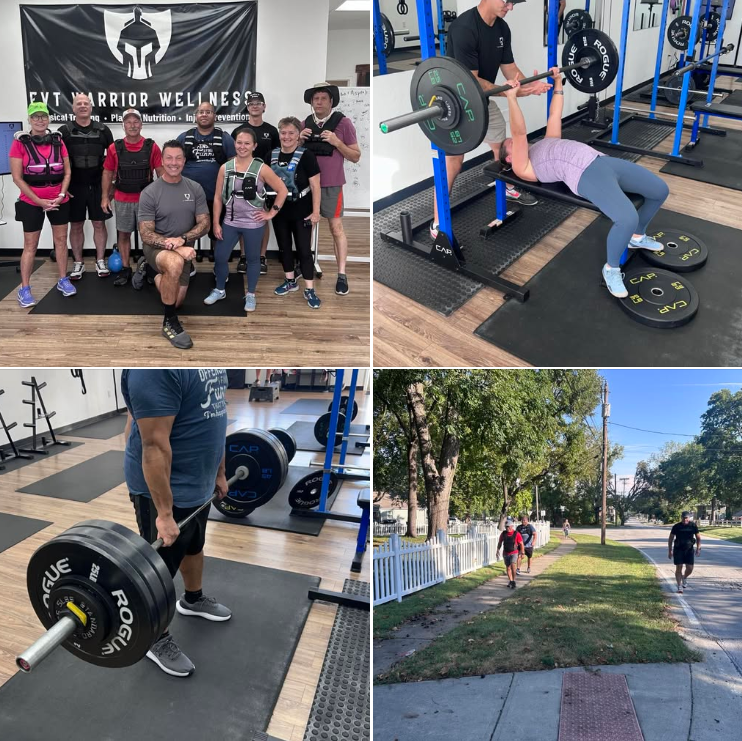
This clip is from a session I filmed for our training staff at FVT Warrior Wellness, where I run them through the monthly programming we use in our small group workouts. This piece is the conditioning finisher — simple, fun, and it’ll light you up.

How it works:

• Line up kettlebells from 8–32 kg.
• Do 10 swings every 45 seconds, then move to the next bell in line.
• Repeat for 10 rounds = 100 total swings.

The challenge is to keep your form tight as you rotate through different weights. I first picked this one up from Dan John at an RKC certification — and it’s been a go-to ever since.

I love this finisher because it forces you to manage fatigue while still executing clean reps. You get the metabolic hit of changing loads but the focus of just one movement (swings). And it’s scalable — on a lighter day, you might start at 8 kg; on a heavy push, maybe begin at 20 kg and go upward. This is exactly the kind of conditioning I build into Gladiator’s Edge Kettlebell — carefully structured progressions, program templates, and guidance around when to push the intensity or dial it back. The bundle is retiring soon, so now’s the time to grab access while it’s still available:

–>> https://forestvance.lpages.co/gladiators-edge-kettlebell-last-chance-sale/

A few coaching tips:

  • Hinge, don’t squat — your hips drive the motion.
  • Keep tension through the core — no rounding or overarching.
  • Re-grip cleanly each round, let the bell settle.

Finishers like this aren’t just “extra.” They’re strategic tools. In Gladiator’s Edge you’ll find workouts that combine finishers, progression logic, and recovery weeks so you keep building strength without overdoing it. If you’ve been thinking about grabbing the system, this is the final chance to get the full bundle:

–>> https://forestvance.lpages.co/gladiators-edge-kettlebell-last-chance-sale/

Try the 10 × 10-swing protocol tomorrow and see how it feels. Note your heaviest and lightest weights, any form breakdowns, and which weight jumps felt hardest. That kind of reflection is exactly what makes the Gladiator’s Edge approach so effective — it’s structured, intentional training that keeps you progressing for the long haul.​

– Forest Vance
KettlebellBasics.net
ForestVanceTraining.com

Project Bodyweight³ (free sample workout + flash sale)

Today kicks off Day 1 of my Labor Day Flash Sale!

Project Bodyweight³ (Cubed) is on special for today only – plus, you’ll get my No Gym? No Excuse! guide FREE.

Grab it here now:

-> GET – Project Bodyweight³ (Cubed) – Special Pricing + get my No Gym? No Excuse! guide FREE

Sample Workout – 23-Min At-Home Bodyweight Power Session

PART 1 – Chin-Up Ladder
1 rep → rest 30 sec
2 reps → rest 45 sec
3 reps → rest 60 sec
Repeat 3x
(Too easy? Try 2/4/6 instead)

PART 2 – Upper Body Complex (3 rounds)
• 30 mountain climbers
• 20 push-ups
• 10 spiderman climbs
• 5 burpees

PART 3 – Lower Body Complex (3 rounds)
• 10 squat jumps
• 10 reverse lunges / leg
• 10 step ups / leg
• 20 bodyweight squats

Total time: about 23 minutes. Legs = toast. Core = fried. Lungs = burning.

That’s just a taste of what’s inside Project Bodyweight³ — a full 21-week system designed to help you shred fat, build lean muscle, and get athletic again.

Grab today’s deal before midnight:

-> GET – Project Bodyweight³ (Cubed) – Special Pricing + get my No Gym? No Excuse! guide FREE

Talk soon,
Forest

12 in 12 KB Challenge

Want to lose up to 12% of your bodyweight in 12 weeks while getting stronger with kettlebells?

Reply YES and I’ll send you the details on my 1-to-1 “Ageless Warrior” coaching program.

How is this possible? A few quick keys:

  • Consistency → showing up for the right KB workouts each week
  • Customization → built around your level, time, equipment, injuries
  • Nutrition → the right calories/macros + food you’ll actually eat
  • Accountability → daily check-ins so you stay on track

That’s the difference between a cookie-cutter $29 program and a personalized plan.

If you’re ready to make this happen — Reply YES and I’ll send you the details on my 1-to-1 “Ageless Warrior” coaching program.

Talk soon,
Forest Vance
M.S., Human Movement
Certified Kettlebell Instructor
FVT Warrior Wellness

PS – Here’s a real example of what a week 3 workout from a coaching client looked like — and why each piece was there:

Warm-up (5 minutes)

  • Glute bridges x12 → activate glutes, open tight hips
  • 90/90 hip openers x5/side → mobilize hips before swings/snatches
  • Cat-cows x8 → get spine moving before hinging
  • Shoulder dislocates (band or PVC) x10 → prep shoulders for overhead work

Built for this client who had tight hips and rounded shoulders from desk work.

Main Lift (KB Snatch, 10×5/side)

  • Start with 16kg (35 lbs) KB
  • Focus = smooth form, controlled breathing, building volume safely

By week 3 we’d already established a base with swings/cleans – this was the logical next step.

Accessory Strength (Core Stability, 3 rounds)

  • Plank hold, 30 sec
  • Side plank, 20 sec/side
  • Hanging knee raises x8 (or lying leg raises if equipment limited)

Core stability = protect low back, build strength for KB lifts.

Conditioning Finisher (8 min AMRAP)

  • 10 KB swings (moderate weight)
  • 10 push-ups (hands elevated on bench)
  • 100m fast walk or march in place (low impact option)

The client wanted extra conditioning without hammering the knees.

Mobility Cool-Down (5 minutes)

  • Standing calf stretch, 30 sec/side → loosen ankles (helped knee stability)
  • Couch stretch, 30 sec/side → open quads/hip flexors from sitting
  • Single-leg balance drill, 20 sec/side → improve knee stability
  • Supine hamstring stretch, 20 sec/side → relieve tight posterior chain

Want to lose up to 12% of your bodyweight in 12 weeks while getting stronger with kettlebells? Reply YES and I’ll send you the details on my 1-to-1 “Ageless Warrior” coaching program.

The pull-up “cheat code” for people 40+

Want to know one of the most significant differences between someone who masters their first pull-ups at age 40+ versus someone who struggles for years?

Recovery.

Your 25-year-old self could bang out pull-up attempts daily and recover overnight. Your 40+ self needs a more innovative approach.

Here’s the “cheat code”:

Example from Track 1 (Beginner – 0 Pull-Ups):

-> Click here to check out the full “Operation Pull Up” Zero-to-20 Pull Up Plan

Day 1: Hollow holds + Ring rows + Assisted pull-ups

Day 2: Bar hangs + Slow negatives + Flexed-arm holds

Day 3: Self-assisted pull-ups + Progression work

Then you rest and repeat the cycle.

Notice the pattern? Each day targets different movement patterns and energy systems. You’re not just “doing pull-ups” – you’re building:

-> Core stability (hollow holds)

-> Grip strength (bar hangs)

-> Eccentric control (negatives)

-> Full range strength (assisted reps)

(This is just one example from the beginner track – each of the 6 tracks has completely different progressions based on your current ability level.)

When you respect your body’s recovery needs and train the RIGHT movement patterns for YOUR level, you progress FASTER than the young guys grinding random pull-up attempts every day.

Inside Operation Pull Up, every single workout is mapped out with this recovery principle built in. Each exercise, each rep count, each rest period – all designed specifically for 40+ individuals at every skill level.

Plus, you get the Kettlebell Tabata bonus that burns fat 38% faster in just 20 minutes. Still on “stand-alone launch” pricing for everything. Grab your copy here:

“Operation Pull Up” Zero-to-20 Pull Up Plan​

Here’s to your first pull-up breakthrough,

— Forest Vance, MS – Former Pro Football Player – Owner, FVT Warrior Wellness – Creator, Operation Pull Up​

3 mistakes killing your pull-up progress

I’ve watched hundreds of people over 40 struggle with pull-ups.

Most make one (or two, or all) of the same 3 mistakes:

Mistake #1: Starting too aggressive

They jump straight to full pull-ups instead of building the foundation. Result? Shoulder pain and zero progress.

Mistake #2: Ignoring grip strength

Your grip gives out before your back muscles. You’re not weak – your grip just isn’t ready.

Mistake #3: Random workouts

They do pull-ups “whenever” instead of following a progressive system. Consistency beats intensity every time.

— Here’s what actually works instead (BTW – this is just a preview – the full program has complete day-by-day breakdowns, exact rep schemes, video demonstrations, form cues, and much more detail for every single exercise):

Track 1: Beginner (0 Pull-Ups) Day 1: Hollow holds, ring rows, assisted pull-ups Day 2: Bar hangs, slow negatives, flexed-arm holds Day 3: Self-assisted pull-ups with progression

Track 2: Novice (1-4 Pull-Ups) Pull-up ladders: 1,1,1,1,1 → 2,1,1,1,1 → 2,2,1,1,1 Building volume systematically

Track 3: Intermediate (5-8 Pull-Ups) Ladder example: 5,4,3,2,1 (15 total reps) Adding weighted variations

Track 4-6: Advanced to Master High-volume ladders up to 55+ total reps Heavy weighted pull-ups for strength

#

In the Operation Pull Up Zero-to-20 Pull Up Plan, you start where YOU are. Each track has specific daily workouts – hollow holds, negatives, flexed-arm hangs, ring rows – all designed to build the exact strength patterns you need. This is the systematic approach that’s helped 203+ people over 40 finally achieve their pull-up goals. And it’s still available at stand-alone launch pricing at the link below:

-> “Operation Pull Up” Zero-to-20 Pull Up Plan

Your pull-up breakthrough starts now,

— Forest Vance, MS – Former Pro Football Player – Owner, FVT Warrior Wellness – Creator, Operation Pull Up

The #1 mistake people 50+ make with kettlebells

What is the biggest mistake I see people over 50 make with kettlebells?

They try to train like they’re 25.

Here’s what I mean:

At 25, you could do back-to-back high-intensity workouts and bounce back overnight. Your joints could handle whatever you threw at them.

At 50+? Your body needs a completely different approach:

Recovery: You can work out every other day, but be smart about it. Push hard with your kettlebell strength work, then alternate with conditioning or mobility days. Don’t go heavy every single session.

Joint prep: Always start with something specific to get you ready for the work ahead. If you’re doing swings and hinges, prep those movement patterns. Heavy upper body day? Make sure your shoulders are warmed up first.

Progression: Start with appropriate progressions for YOUR current fitness level, then slowly work up. Your connective tissue needs time to adapt – rushing this is where injuries happen.

Movement quality: Perfect form beats sloppy every time. I’d rather see you do fewer reps with great technique than high volume with bad form. You’ll get more results AND reduce injury risk.

By the way, we cover all of this in “The Kettlebell Revolution for People Over 50“.

You see, most kettlebell programs are designed by 30-something trainers who think “harder = better.” But I created this program to works WITH your body, not against it.

You can still grab it at the original pricing before time runs out. But more importantly, click here to see exactly how the Over 50 KB Revolution approach is different from those “beast mode” programs that leave you sore for a week.

-Forest Vance – Over 50 Kettlebell Expert

5-7 Min KB Shoulder Warm-Up

Quick story for you today and a warm-up you can steal.

Over the last 30 years, I’ve done a lot of things that’ve beaten my shoulders up—15 years of contact sports, 30+ years of lifting weights, and a good chunk of time in the last decade doing everything from grueling Kettlebell cert weekends to Spartan races to powerlifting comps.

One of the turning points was about five years ago, when I tore my pec and had to get surgery. That rehab process left me hesitant to do a lot of the things I used to love—heavy kettlebell pressing, snatches, barbell benching. And it became really clear: what had always worked before, wasn’t working anymore.

So I went back to the drawing board. I already had my Master’s in Human Movement with a post-rehab focus. I’d dabbled in yoga during my football days. But I really dove back into that world—corrective exercise, movement prep, mobility work—and never looked back.

I even completed my 200-hour yoga teacher training last year to deepen my understanding and sharpen my own practice.

And all of that came together in the program I call the 8-Minute Shoulder Fix.

It’s a 28-day plan, and it’s honestly just a really solid, structured shoulder-focused daily stretch, mobility, and strengthening program that helps you build healthier, more mobile, pain-free shoulders over time.

I actually did this exact protocol leading up to a weeklong yoga training earlier this year. I thought I’d be the stiffest guy in the room, especially in my shoulders and thoracic spine. But after doing this daily for a month beforehand… I held my own.

Same thing after pec rehab. Once I was cleared, I used these movements to rebuild my strength. Eventually, I got back to pressing and benching what I was doing before the tear—and even entered a powerlifting meet last year.

Here’s a 5–7 Minute Shoulder Warm-Up I’d recommend before kettlebell pressing, barbell benching, snatching, or overhead work:

  1. Wall Slides – 1×10
    Opens up the thoracic spine and activates upward rotation.
  2. Band Pull-Aparts – 2×15
    Fires up the posterior shoulder and mid-back.
  3. Bottoms-Up KB Carry – 2×20 yards per arm
    Great for rotator cuff activation and shoulder stability.
  4. Kettlebell Halos – 2×8 each direction
    Mobilizes the joint and preps for multi-plane motion.
  5. Dead Hangs – 2×15-30 seconds (if shoulders allow)
    Opens up the shoulders, builds grip and stability.
  6. Arm Bar or Open Book Stretch – 30 seconds/side
    Releases the anterior shoulder and improves thoracic rotation.

Optional: Add light Turkish Get-Ups (1-2 reps per side) if you want to integrate everything.

Try that before your next pressing workout. You’ll feel the difference. And if you want a full 28-day plan with follow-along videos and PDFs to guide you through it—check out the 8-Minute Shoulder Fix here:

-> 8-Minute Shoulder Fix

The special launch price is ending, but it’s still an absolute steal for what you get. And after today, this’ll be the last time I’ll be talking about it for a while.

So if you’ve got shoulder issues—or you want to avoid them—this is a great place to start.

Peace out, and have a great day!

— Forest Vance, MS
Certified Corrective Exercise Specialist
200-Hour RYT
Former Pro Football Player
KettlebellBasics.net